What Is Live Rosin? Solventless, Explained
Quick Answer: What is Live Rosin?
Live rosin is a cannabis concentrate made from fresh-frozen plant material without using butane, propane, or ethanol to dissolve the resin. Cold water and agitation separate the trichomes, then heat and pressure press their oils into rosin. The process is valued for flavor and plant character, but lower yields and hands-on production usually make it cost more than distillate.
You can spot live rosin on vape boxes, gummy jars, and concentrate menus, usually beside a higher price. The idea is simple. Producers keep the harvest cold, separate its resin glands mechanically, and press that material with heat. Knowing each step helps you read the finished product. So, let's get into it. What is Live Rosin?
What Live Means
Live describes the starting material, not the strength of the final product. Instead of drying and curing the harvested flower first, producers freeze it soon after harvest. That fresh-frozen approach limits the time the plant spends drying in open air, when some of its light, aromatic compounds can change or disappear.
The goal is to carry more just-harvested aroma into the concentrate. It does not mean every terpene survives or that two batches will taste identical. Genetics, storage, washing, drying, and pressing all influence the result. Fresh-frozen material simply gives that flavor profile a strong starting point.
What Solventless Means
In cannabis language, solventless means the resin was separated without chemical extraction solvents such as butane, propane, or ethanol. Water is obviously present during an ice water wash, but it is not used to dissolve the cannabinoids and terpenes. Cold and movement do the separating. That makes live rosin a mechanical extract.
Solventless is a description of the process, not a shortcut for clean, safe, or automatically better. A finished vape or edible may contain other ingredients, and contaminants are still possible. The label and Certificate of Analysis still matter. Solventless tells you how the resin was collected, not the entire quality story.

How Live Rosin Is Made
The process begins with fresh plant material that is frozen quickly and kept cold. For hash rosin, the frozen material goes into very cold water. Gentle agitation helps the brittle trichome heads break away from the flower. Those tiny resin glands are where much of the plant's cannabinoids and aromatic compounds are concentrated.
The wash then passes through fine screens or filter bags that sort the separated material by size. The collected trichomes become ice water hash, sometimes called bubble hash. They must be dried carefully before pressing because trapped moisture can affect texture and flavor. More agitation is not always better. Aggressive washing can pull extra plant particles into the hash.
Once the hash is dry, it is placed in a filter bag between heated press plates. Pressure encourages the resin to flow while solids stay behind. The producer balances temperature, pressure, and time. Too little may leave oil in the bag. Too much can darken the rosin or push away volatile aroma. The finished texture also depends on how the material is handled after pressing.
Why the Process Changes Flavor
Terpenes are volatile aromatic compounds, which means they are especially sensitive to time, air, and temperature. Freezing the plant early and keeping the process cold until pressing can help retain more of the original aromatic profile than extended drying and heavy refinement. That is why well-made live rosin is often described as expressive and closer to the character of the starting flower.
Not every live rosin product will taste louder than every distillate product. Starting material matters, and rosin may be one part of a larger blend. A terpene panel can show what was measured. The ingredient list tells you whether the product is pure rosin, a live rosin blend, or simply includes it.
Why Yield and Price Are Different
Solventless production is selective. Not every strain releases trichomes easily in ice water, and not every gram of hash returns the same amount of rosin. Producers also need freezer space, cold processing, careful drying, skilled labor, and time. Lower recovery means less concentrate to sell, which helps explain the higher price. Price alone is not proof of quality, but the production math is different.
Live Rosin Compared With Distillate
Live rosin and distillate are built around different goals. Rosin tries to carry a broader piece of the starting resin into the final extract. Distillate is made by refining an extracted oil and separating components through distillation, usually under vacuum. The result is a cannabinoid-rich base that can be consistent, versatile, and easy to formulate across vapes and edibles.
During that refinement, native terpenes are commonly separated from the cannabinoid fraction. A brand may add cannabis-derived or botanically derived terpenes later to create a specific flavor profile. Live rosin minimizes that separation and keeps more of the source material's natural mixture together. That is why rosin often carries more strain character while distillate offers a more uniform base.
Neither format wins every time. Choose live rosin when flavor, aroma, and a less-refined process matter most. Choose distillate when consistency or a focused cannabinoid formulation matters more. Compare potency and serving size instead of assuming the extraction method tells you how strong it will feel.

How to Read an Eighty Six Label
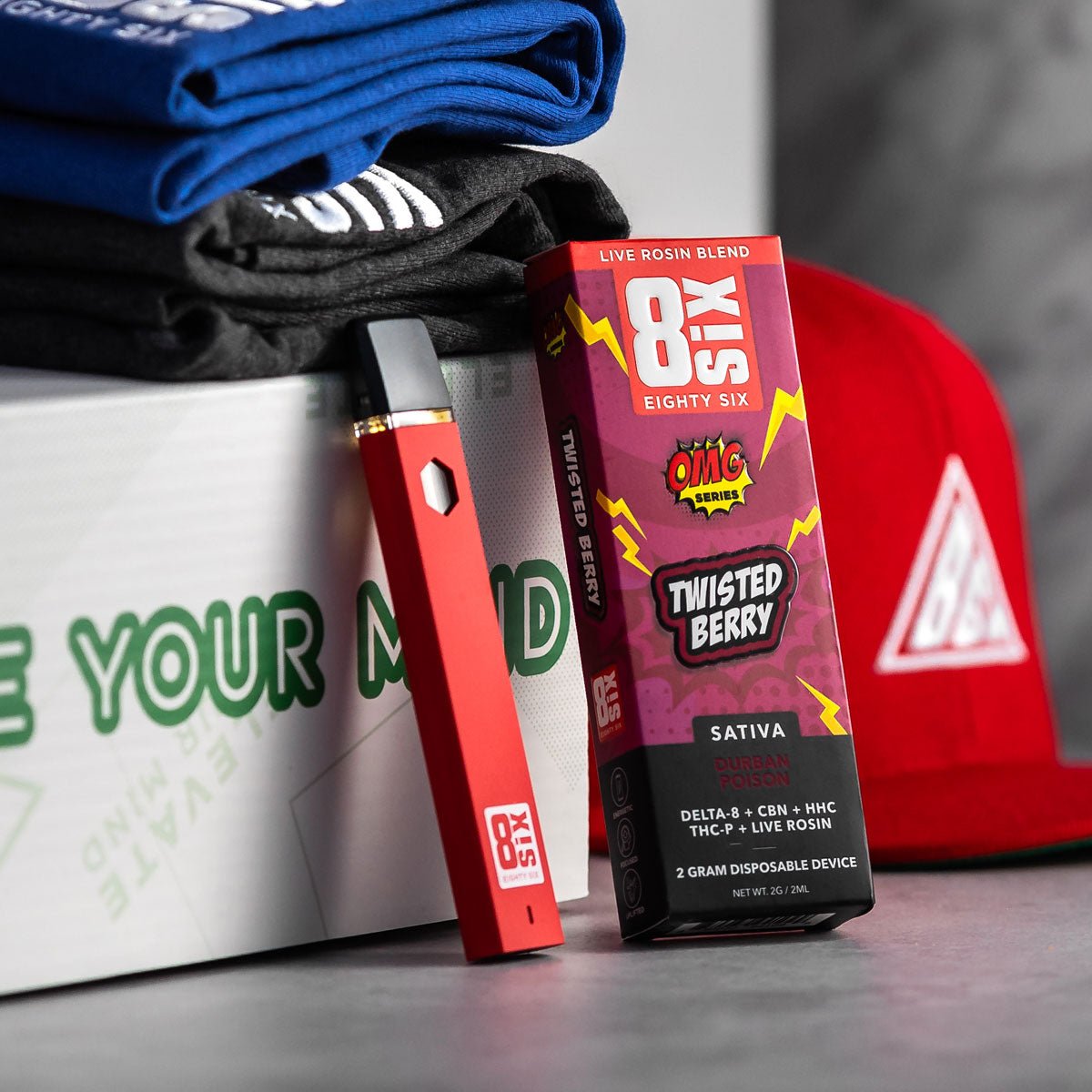
At Eighty Six, the word blend is important. The Live Rosin Blend lineup uses live rosin within broader cannabinoid formulations, so the entire fill is not pure rosin. Check the cannabinoid list, strain or flavor, fill size, and format to understand what the live rosin is doing inside the finished product.
If you prefer an inhalable format, browse the Live Rosin Blend disposables, including Mango Mobbin' and Cooks & Castles. If edibles fit your routine better, the Live Rosin Blend gummies include options such as PRPL Haze and Key Lime Grime. Product availability can change, so use the collection page for the current lineup and open the batch lab report before you buy.
The Bottom Line
Live rosin earns its place on the label through a process that stays close to the plant: fresh-frozen material, ice water separation, careful drying, then heat and pressure. That path can preserve distinctive aroma and flavor, but it also asks more from the starting material and the people making it. Read the full label, check whether the product is pure rosin or a blend, review the lab report, and choose the format that makes sense for your routine.
Read more
Some plans call for a little lift. Others are built around snacks, a comfortable seat, and a movie you have already seen ten times. That is the real point of ...
Get familiar with THC-P, understand the limits of potency claims, and learn which details matter when reading a product label.